The Holy Land, Syria, Idumea, Arabia, Egypt & Nubia.
Author: Roberts, David
Year: 1855 – 1856
Edition: first in this format
Publisher: London; Day & Son
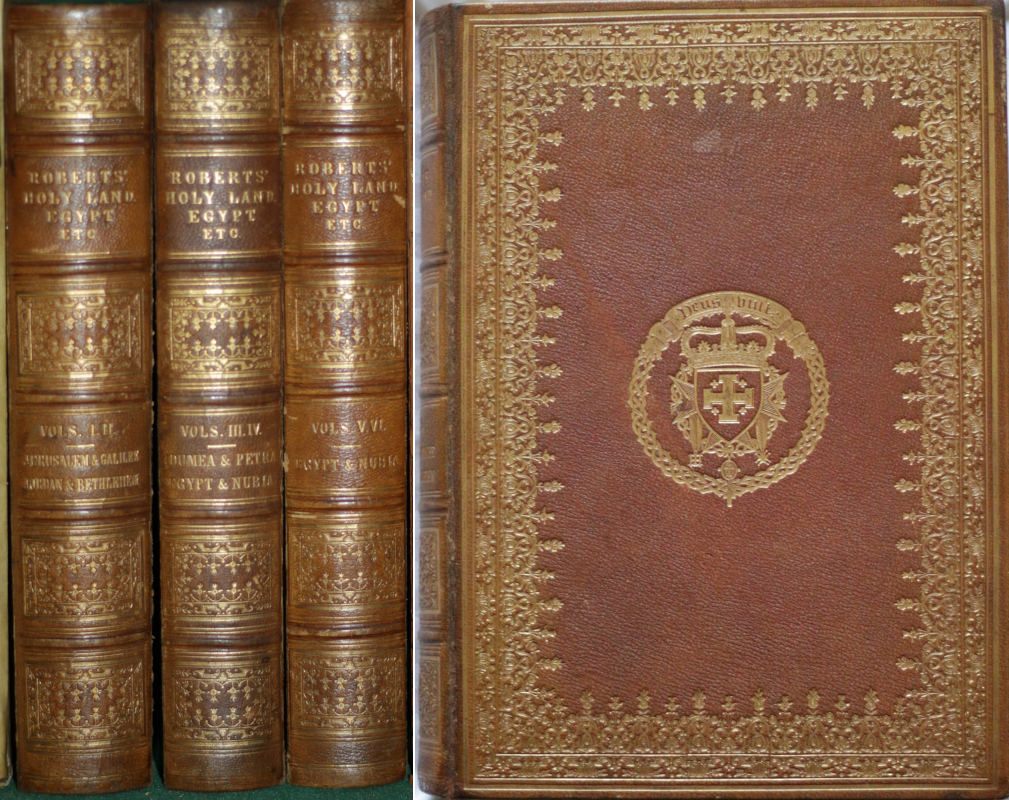
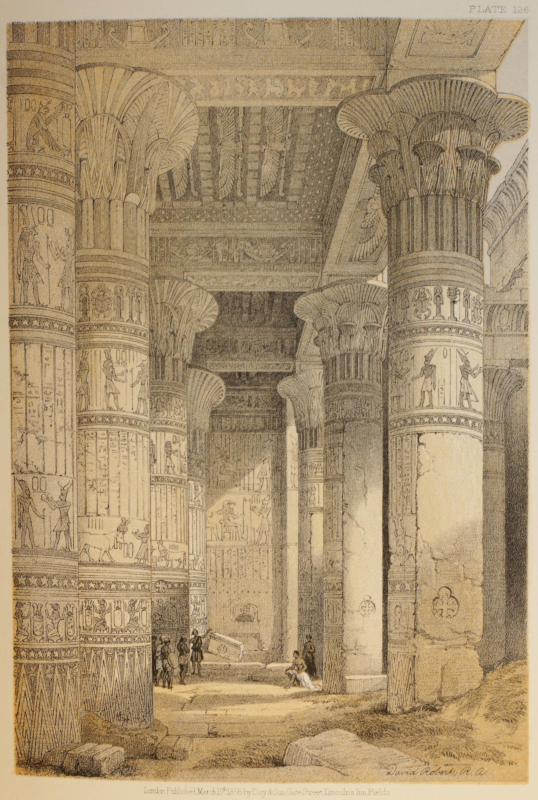
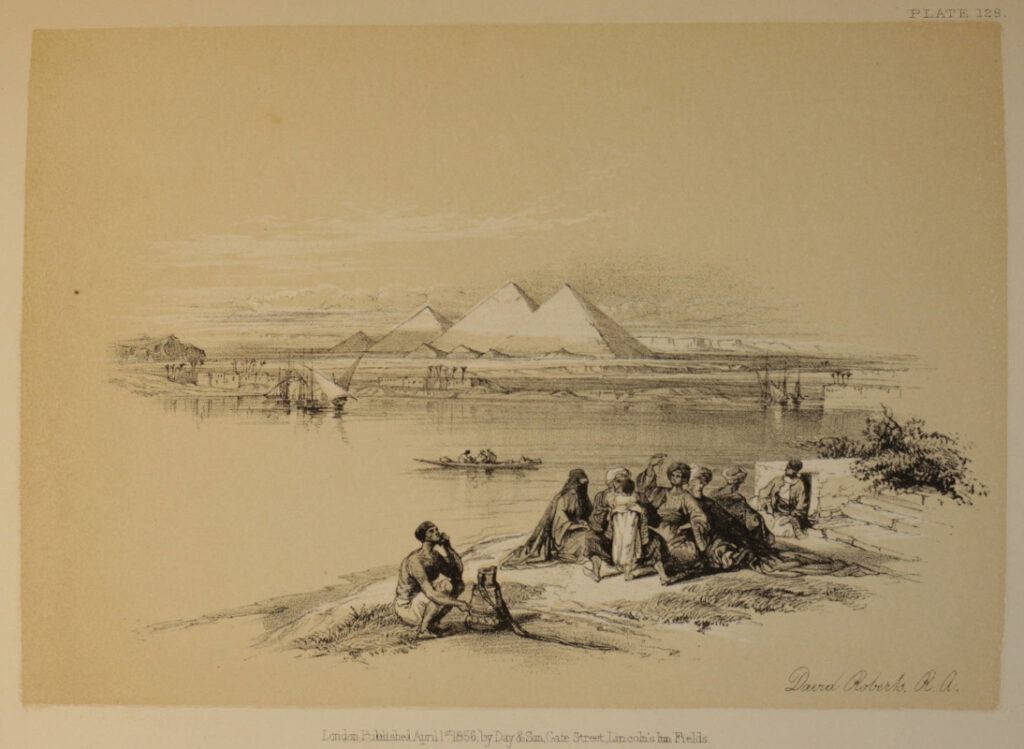
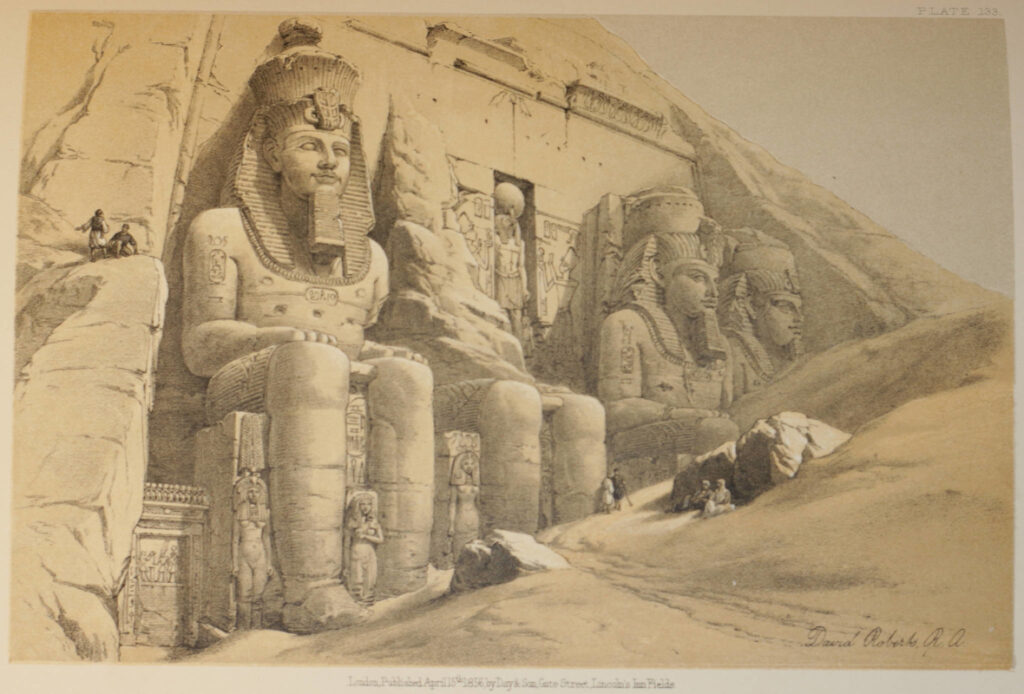
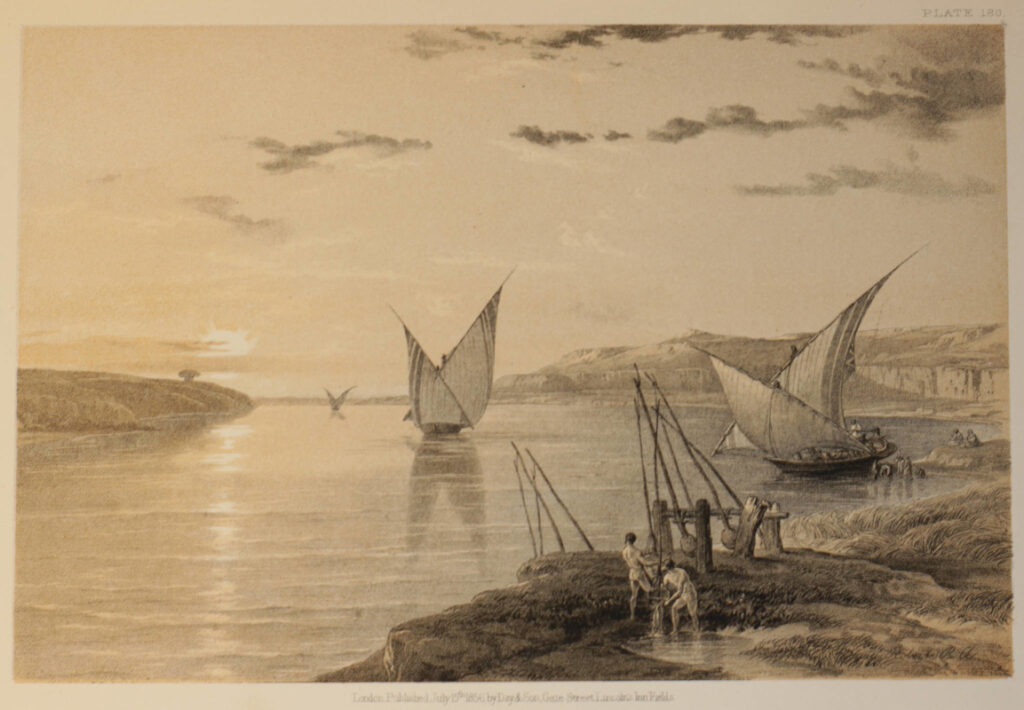
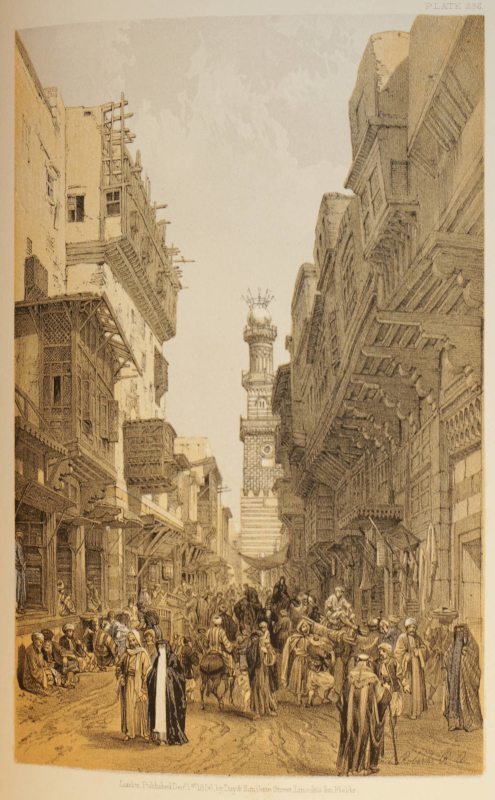
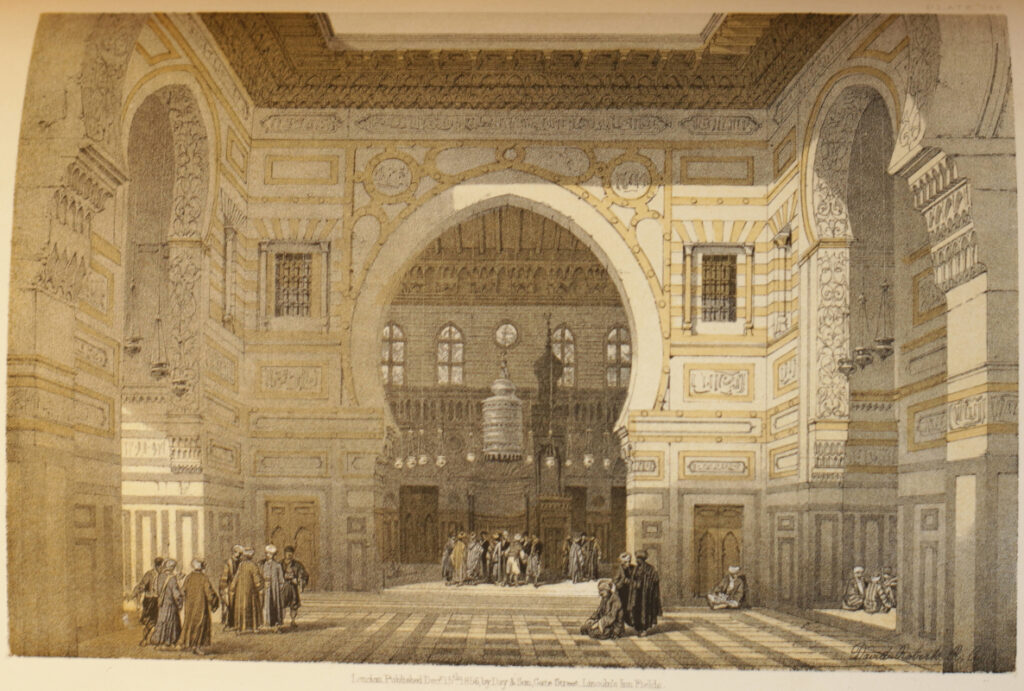
Publisher’s full brown morocco, gilt, 4to, 300 x 210 mm. Six volumes bound as three with 250 numbered plates, including the six title pages and two maps.
On the back board pastedown of the first volume a small label has been affixed with the text: Bound by Leighton Son and Hodge.
On the website of the British Library there is noted about this bookbinder: the firm was founded by Archibald Leighton (1784-1841) and continued by his wife, Jane (c.1785-1869) who moved the business to Shoe Lane by 1848; in partnership as Leighton, Son & Hodge, with her son Robert (1822-88), until 1853, with Frederick Hodge, and later with William Hodge; the firm was still in business in 1881 when it employed a workforce of 400.
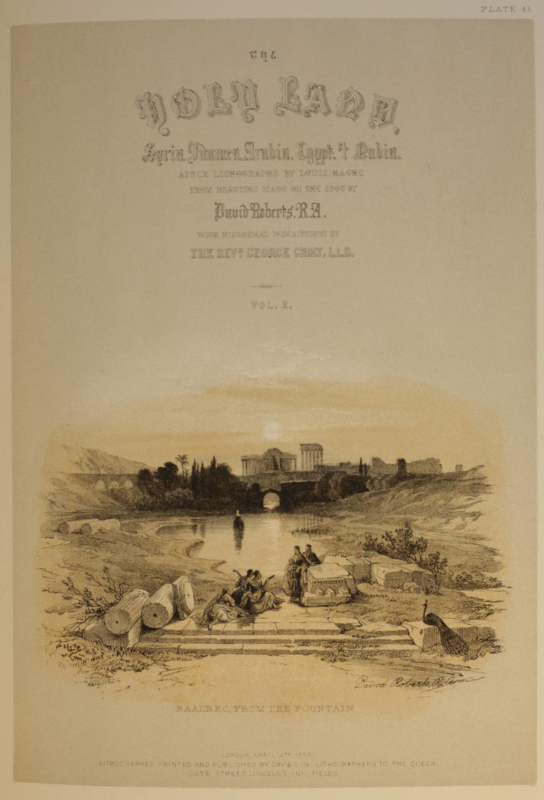
The title pages of the first five volumes dated April 16th, 1855 and numbered respectively “1”, “2”, “3”, “iv” and “v”.
The title page of the sixth volume dated October 1st, 1856 and numbered “vi”.
Quite obviously the title pages of the respective volumes were printed several months before the complete volumes were published, looking at the dates on which the various plates in these volumes were printed.
Apparently some of the plates were later redrawn on the stone. See here
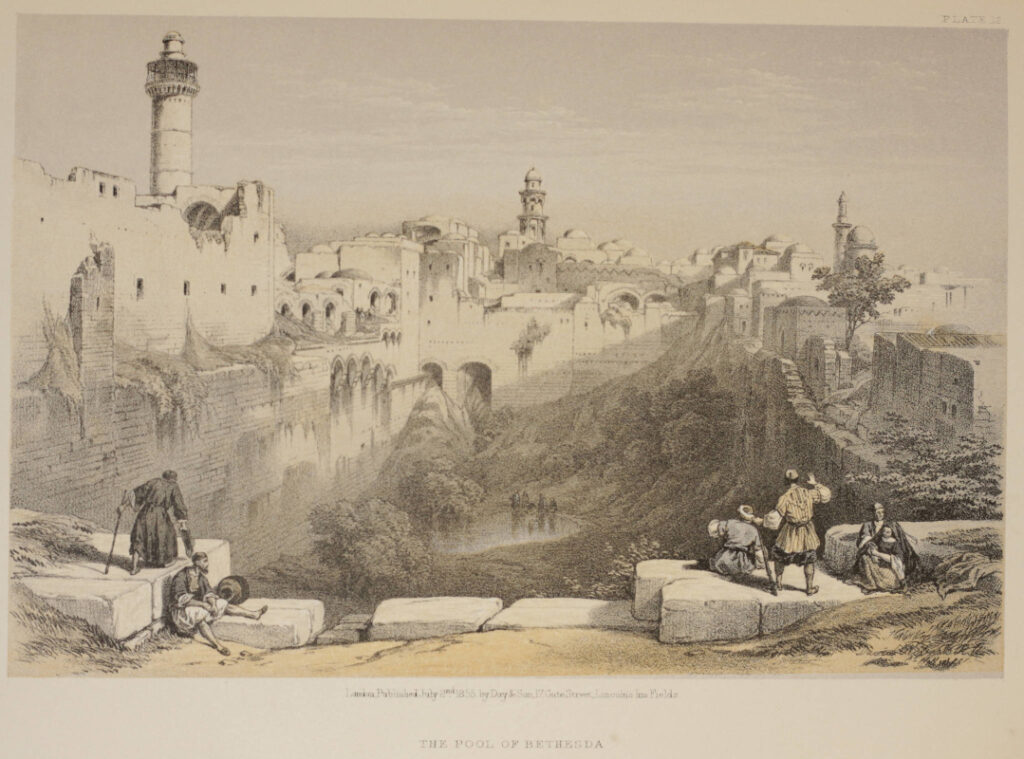
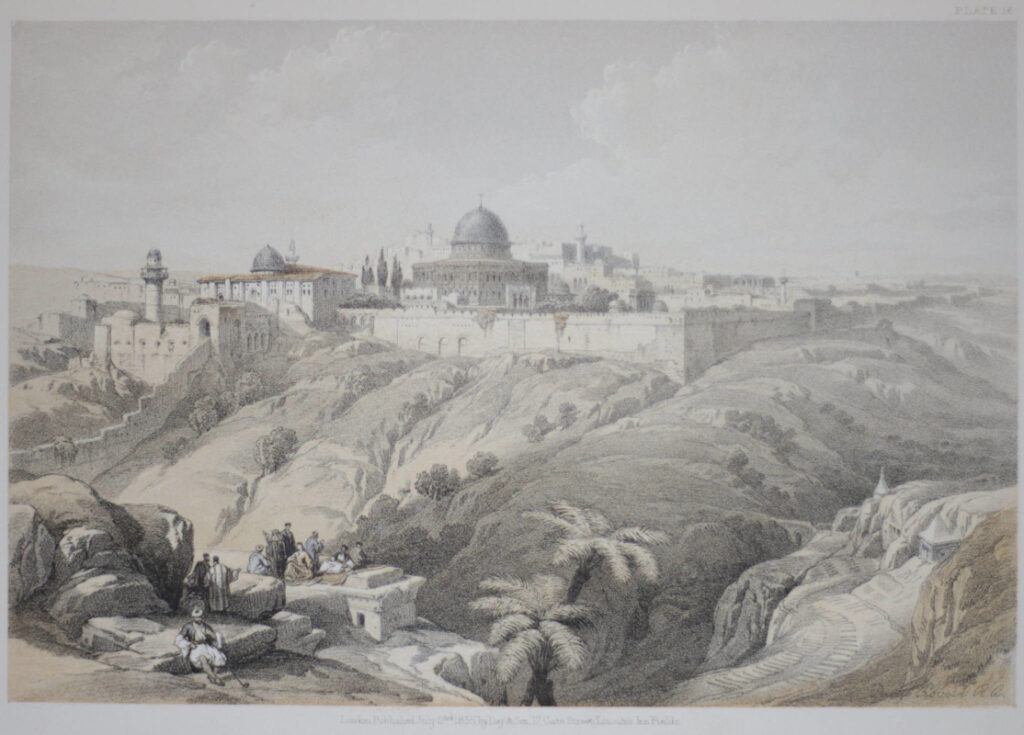
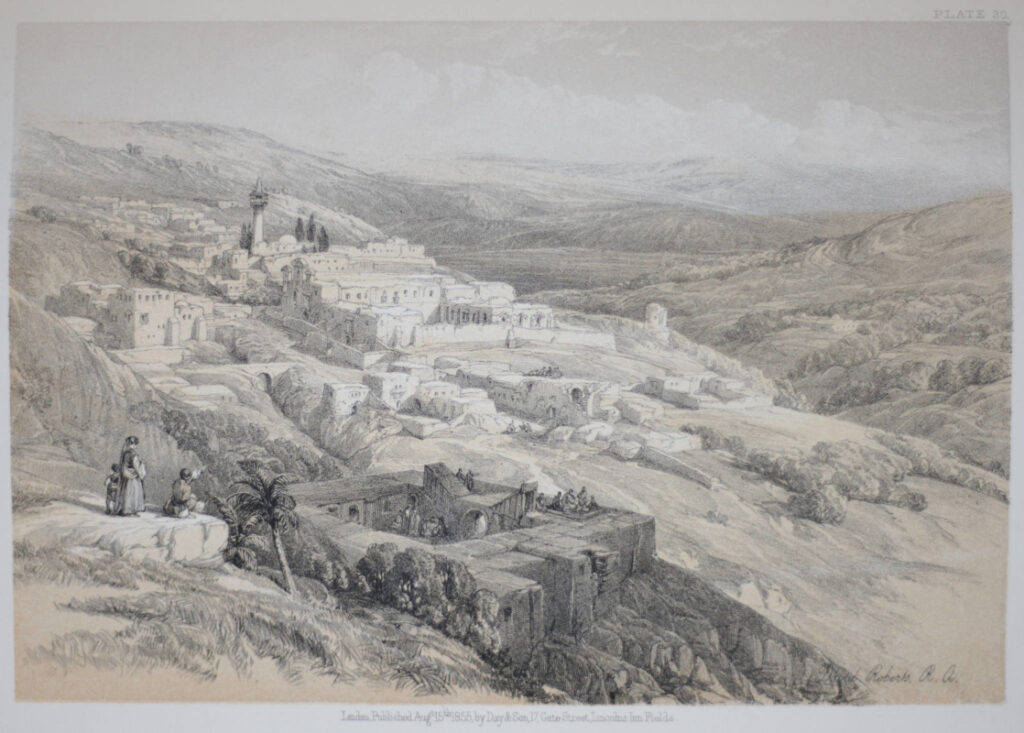
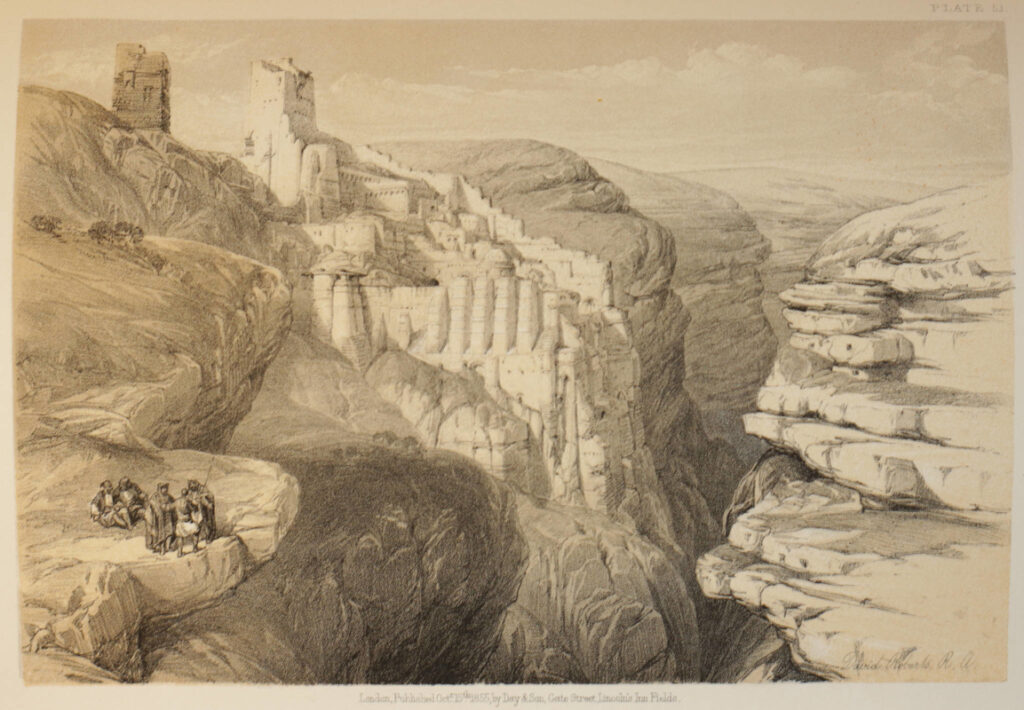
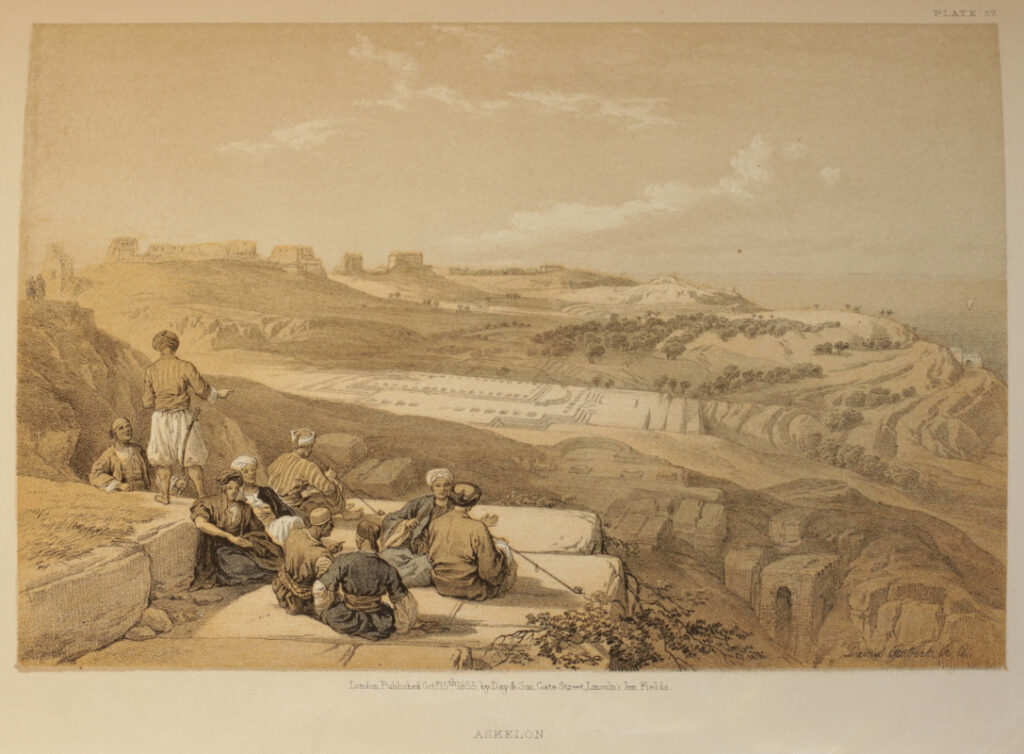
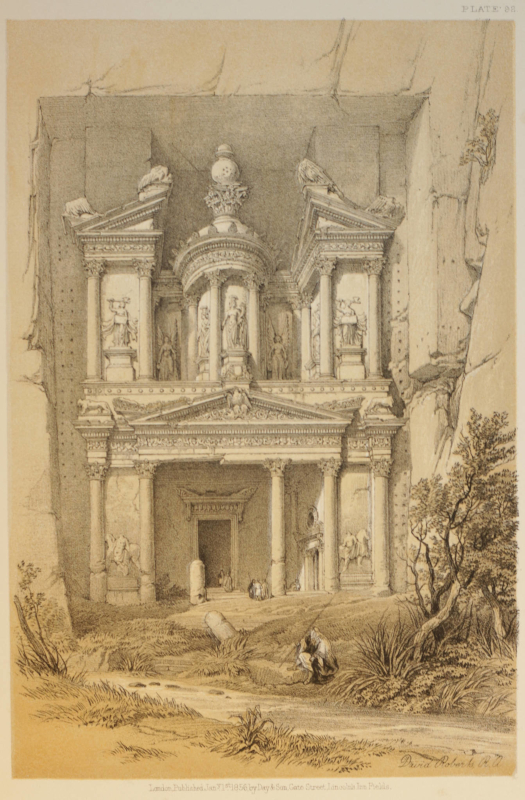
Mostly tinted lithographs plus two chromolithographs.
All plates are protected by tissueguards and are bright and fresh, free from the usual lighter or heavier foxing.
In Bent’s Monthly Literary Advertiser of June 1855 there appeared an advertisement with the text:
… to ensure positive identity between this and the original edition, the whole of the plates have been reduced to the required size by means of photography. …
The invention of photography still was a hot topic at the time given the fact that gradually during the 1850’s the Daguerreotype was being replaced by cheaper photographic processes like the use of the glass plate. 1}
Because of the existence of this ad sometimes it is stated that the plates were reproduced photographically which, however, was impossible at the time. These volumes mostly contain tinted lithographs, while colour photography was first invented in the early 1860’s. 2}
This means that it is possible that the original plates were photographed, printed in b/w on a smaller format and then used as an example to draw the stones for this edition. Direct printing from the plates, whatever photographic material used, was impossible.
This work by David Roberts is widely considered as the most iconic work on the Levant and Egypt in the first half of the 19th century.
Biblio: Abbey Travel 388, Blackmer 1432, Gay 25, Prince Ibrahim-Hilmy II, p. 177.
1} See this article on the site of the Eastman Museum
2} Saman Musacchio; The Birth of Color Photography, CNRS 2018
Acquired from Roseberys, London. Their sale 17 November 2022, lot no. 465.