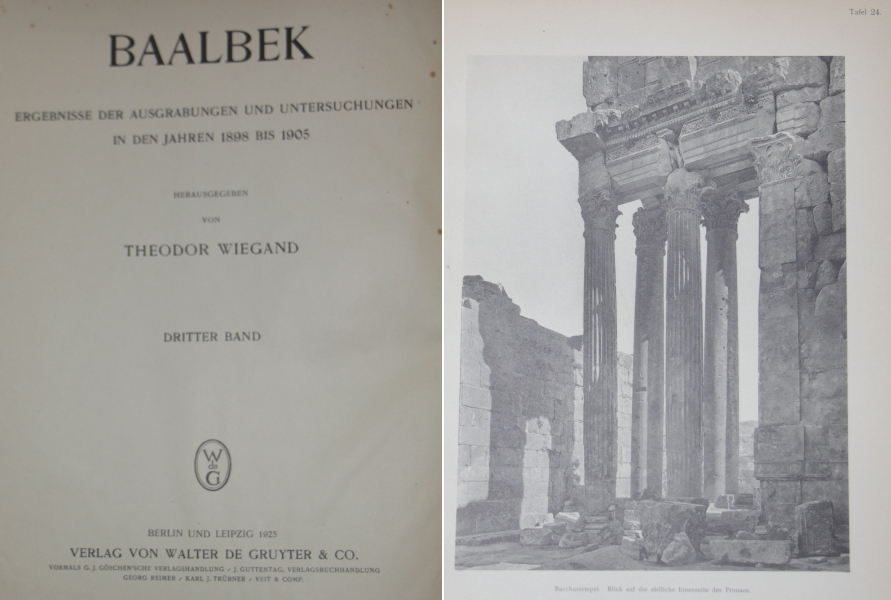
Theodor Wiegand: Baalbek; Ergebnisse der Ausgrabungen und Untersuchungen in den Jahren 1898 bis 1905.
Published by Vereinigung wissenschaftlicher Verleger Walter de Gruyter & Co., Berlin.
Very rare complete first edition of this work.
Vol. I, Erster Band,1921, Text: pp. (8), 130 (letterpress);
Vol. I, Erster Band, 1921, Tafeln: pp. vii, 136 plates, numbered 1 – 44, 44a, 45 – 135. Some of the plates double page.
Vol. II, Zweiter Band, 1923, pp. xiv, 151 (letterpress); followed by 66 plates, numbered 1 – 14, 15/16, 17 – 50, 51/52, 53 – 66, 67/68, 69.
The plates numbered 15/16, 51/52 and 67/68 are double page plates.
Vol. III, Dritter Band, 1925, pp. x, 1, (1), 145 (letterpress); followed by 24 plates of which 2 are chromolithographs. Plate nr. 13 consisting of 2 pages.
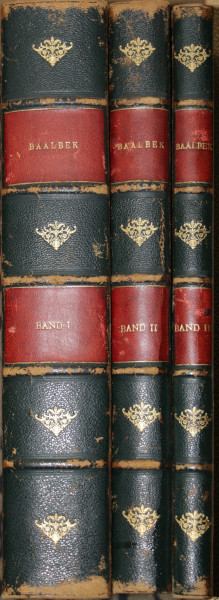
Folio, paper size: 352 x 281 mm. All three volumes bound in contemporary green shagreen over marbled paper covered boards. The spines divided in six compartments by five raised bands with the titles in the second and fourth compartment on maroon labels. The other compartments gilt decorated.
This monumental publication stands as one of the most comprehensive early twentieth-century archaeological reports on the ancient site of Baalbek. Produced between 1921 and 1925, the multi-volume work documents the results of the German expedition lead by Otto Puchstein, conducted between 1898 and 1905 and represents a landmark in the scientific study of Near Eastern classical antiquity. Its contents combine architectural analysis, excavation reports, historical interpretation, and extensive visual documentation, reflecting both the ambitions and the methodological standards of archaeology at the time.
At its core, the work aims to present a systematic and exhaustive account of the ruins of Baalbek, known in antiquity as Heliopolis. The German expedition sought not merely to uncover buried structures but to understand the site as a coherent architectural and religious complex. The publication is correspondingly structured into multiple volumes containing text, plates, and plans, with hundreds of illustrations and detailed drawings accompanying the scholarly descriptions. This integration of visual and textual material is essential to the work’s purpose: to reconstruct the monumental architecture of Baalbek and to situate it within broader Greco-Roman and Near Eastern traditions.
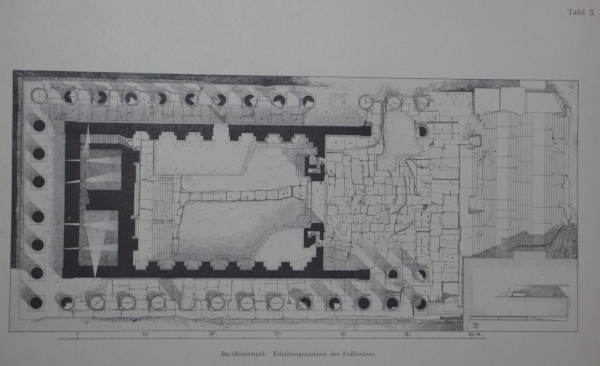
One of the central focuses of Wiegand’s publication is the architectural analysis of the great temples, particularly the Temple of Jupiter and the Temple of Bacchus. These structures are examined in meticulous detail, including their foundations, column orders, decorative elements, and construction techniques. The authors analyze features such as capitals, friezes, and entablatures, often using precise measurements and comparisons with other classical sites. This reflects the influence of classical archaeology as it had developed in the late nineteenth century, with its emphasis on typology and stylistic classification. The Temple of Bacchus, for instance, is treated as one of the best-preserved Roman temples in the East, and its sculptural decoration is analyzed as evidence of artistic exchange between Rome and the provinces.
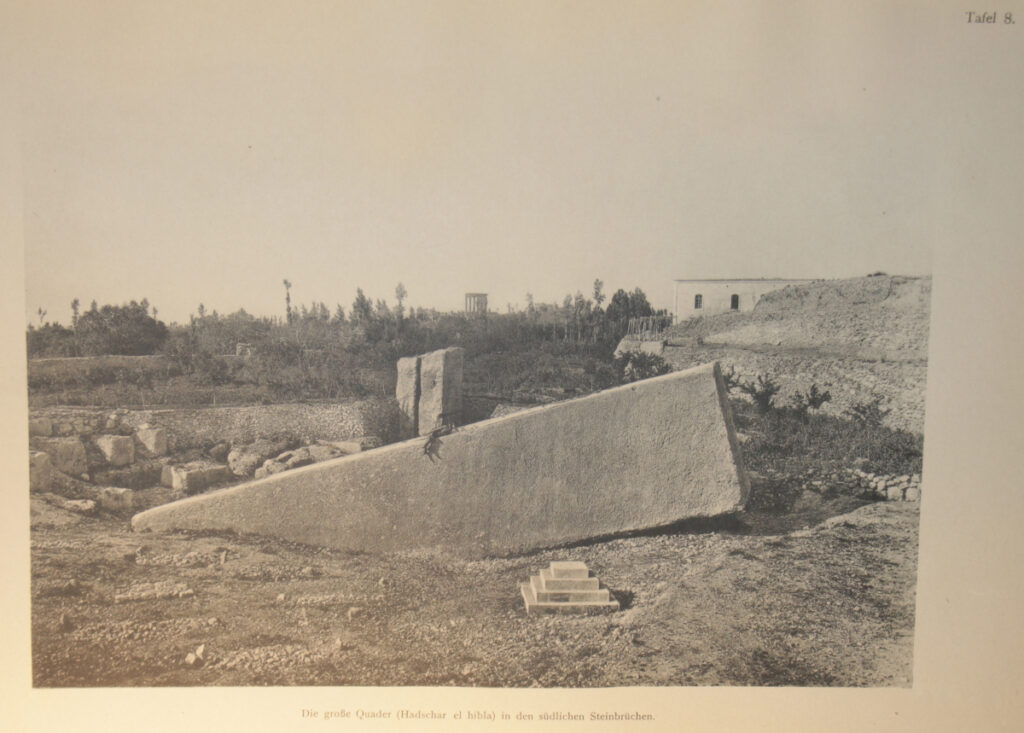
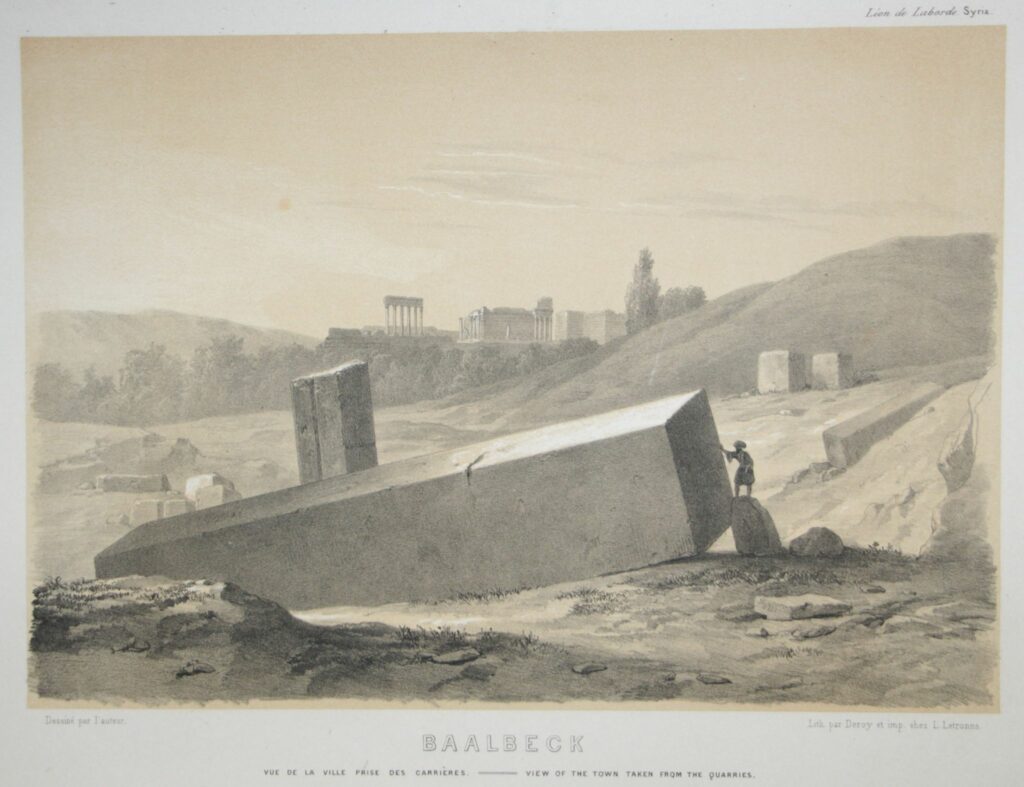
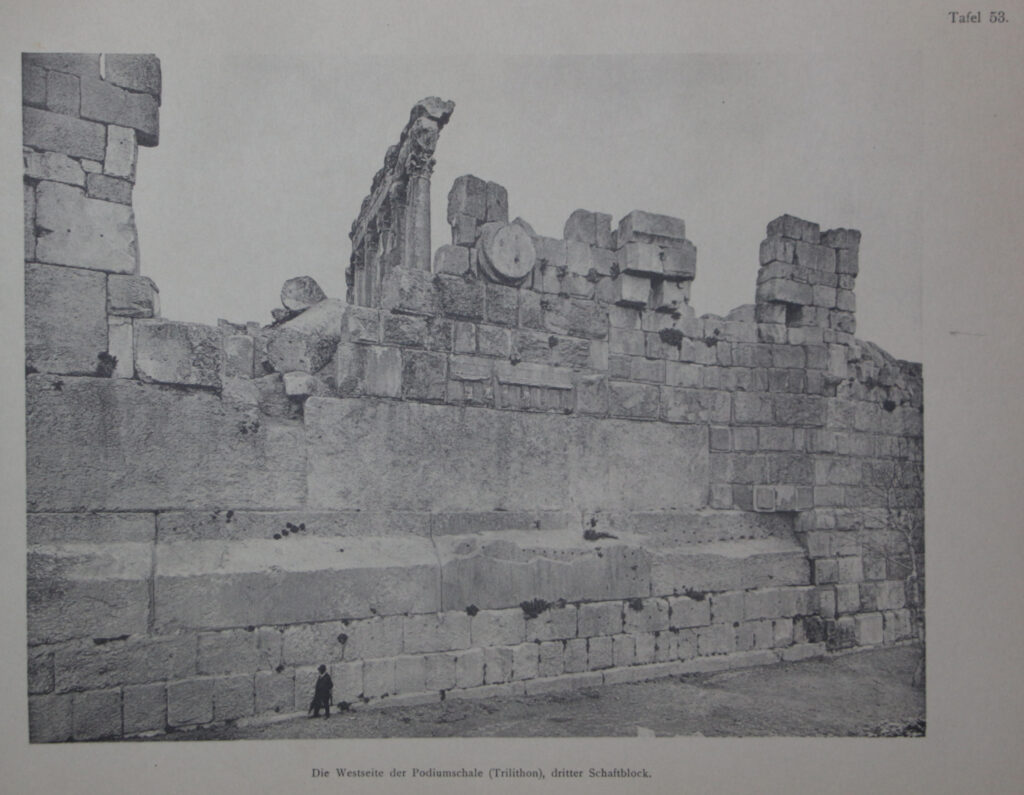
Equally important is the investigation of the massive platform and substructures underlying the temples. The publication devotes considerable attention to the so-called “trilithon” blocks and other enormous stone elements, exploring questions of quarrying, transport, and engineering. These discussions highlight the technical sophistication of ancient builders and attempt to reconstruct the logistics of large-scale construction in antiquity. The nearby quarries are also studied, linking the architectural remains to their geological and industrial context. In this way, the work goes beyond mere description and engages with broader questions of ancient technology and labor organization.
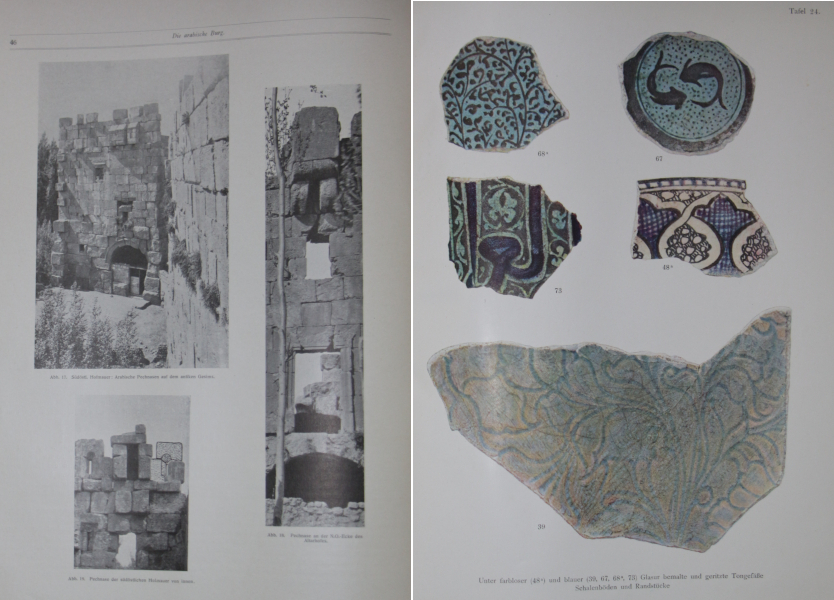
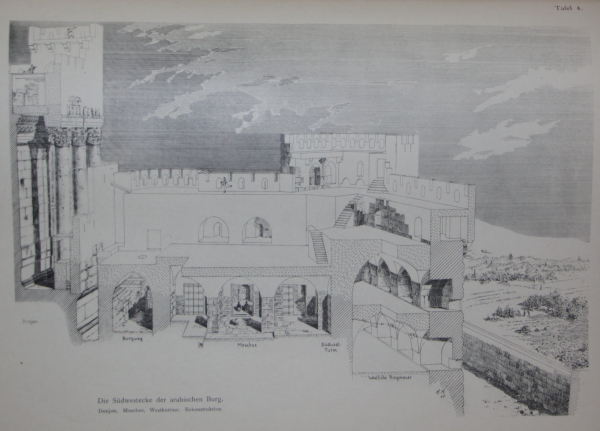
Another significant aspect of the publication is its treatment of the site’s historical development. The authors trace the evolution of Baalbek from its pre-Roman origins through its transformation into a major Roman religious center and its later adaptation in Byzantine and Islamic periods. The inclusion of a Christian basilica and Arab remains underscores the continuity and reuse of the site across centuries. This diachronic perspective reflects an awareness that archaeological sites are not static but layered, with each period contributing to the overall historical narrative.
The work also includes detailed discussions of inscriptions, decorative motifs, and small finds, although its primary emphasis remains architectural. Inscriptions are used to date construction phases and to identify patrons, while decorative elements such as acanthus leaves, reliefs, and ornamental moldings are analyzed for their stylistic and symbolic significance. The authors frequently compare these features with parallels from other parts of the Roman world, situating Baalbek within a network of cultural and artistic exchange.
Methodologically, Wiegand’s publication exemplifies the transition toward a more scientific archaeology. The careful recording of measurements, the use of stratigraphic observations (though not yet fully developed), and the reliance on detailed plans all point to an effort to establish archaeology as a rigorous discipline. At the same time, the work retains certain characteristics of its era, including a strong focus on monumental architecture and an emphasis on classical (Greco-Roman) aspects of the site, sometimes at the expense of earlier or later periods.
The visual component of the publication deserves particular attention. The volumes include hundreds of plates, many based on measured drawings and high-quality photographs. These images serve not only as illustrations but as essential data, allowing readers to examine architectural details and spatial relationships. The combination of text and image reflects the importance of visual documentation in archaeology, especially in times when travel to the site might not be feasible for most scholars.
In addition to its scholarly contributions, the publication also has a broader cultural and historical significance. It represents the culmination of a major German archaeological enterprise in the Near East, reflecting the international competition for antiquities and scholarly prestige that characterized the period. The Deutsche Baalbek Expedition, whose work is summarized in the opening sections of the text, is presented as part of a larger tradition of European engagement with the ancient Near East. This context is important for understanding both the achievements and the limitations of the work, including its perspectives on cultural heritage and its interpretive frameworks.
The influence of Wiegand’s Baalbek volumes has been enduring. For decades, they served as the standard reference for the site, and even today they remain valuable for their detailed documentation. Later archaeological work has revised some of the conclusions, particularly regarding chronology and interpretation, but the fundamental observations and records provided by the German expedition continue to be indispensable. The publication’s combination of empirical detail and synthetic interpretation set a benchmark for subsequent archaeological reports.
In conclusion, Baalbek; Ergebnisse der Ausgrabungen und Untersuchungen in den Jahren 1898 bis 1905 is a monumental scholarly achievement that reflects both the strengths and the limitations of early twentieth-century archaeology. Its comprehensive treatment of architecture, its integration of visual and textual evidence, and its attempt to reconstruct the historical development of Baalbek make it a foundational work in the study of the ancient Near East. At the same time, its focus on monumental and classical aspects reveals the priorities of its time, offering modern readers insight not only into the ancient site itself but also into the history of archaeological practice.
Acquired from Volaterra Books, Barcelona, May 2025.
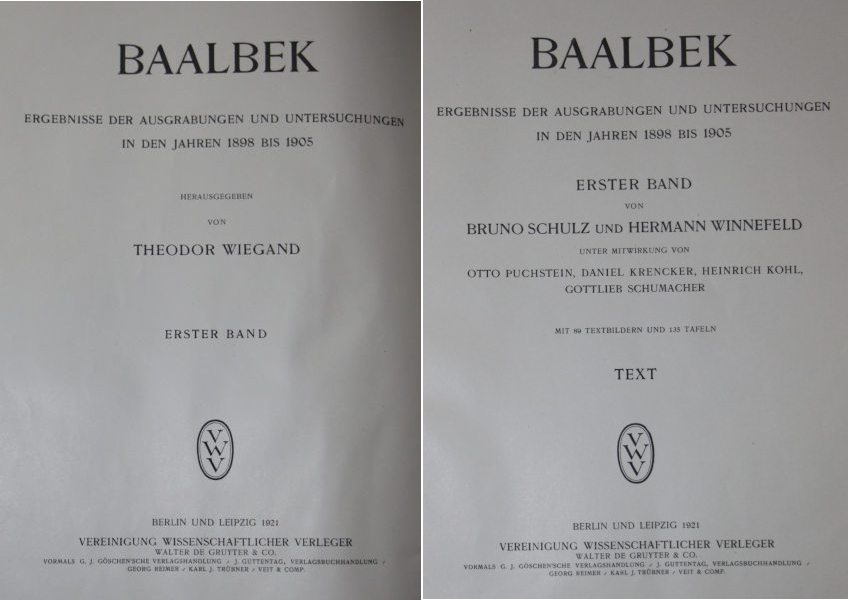
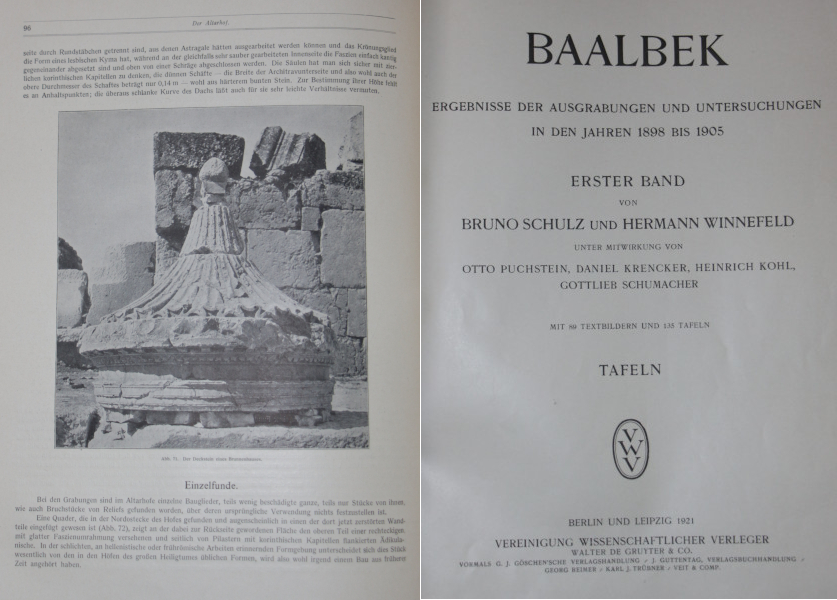
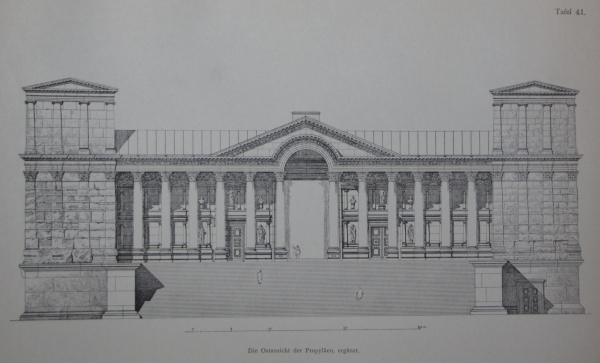
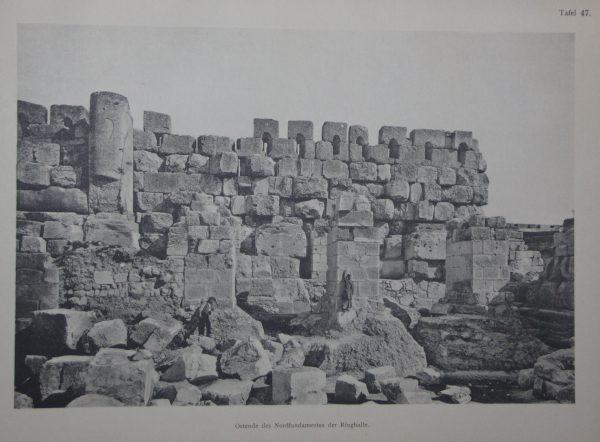
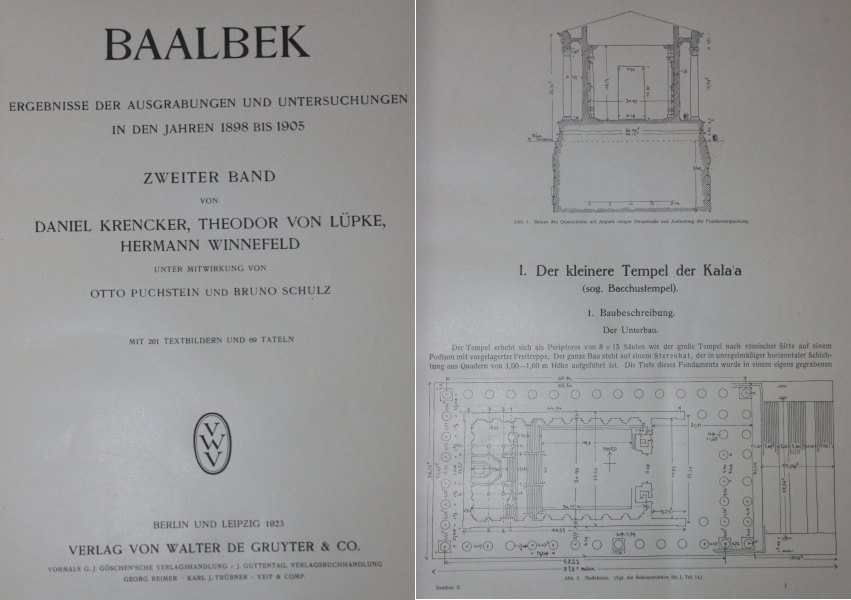
A digital facsimile can be found at https://archive.org/details/gri_33125008087831/mode/2up?view=theater
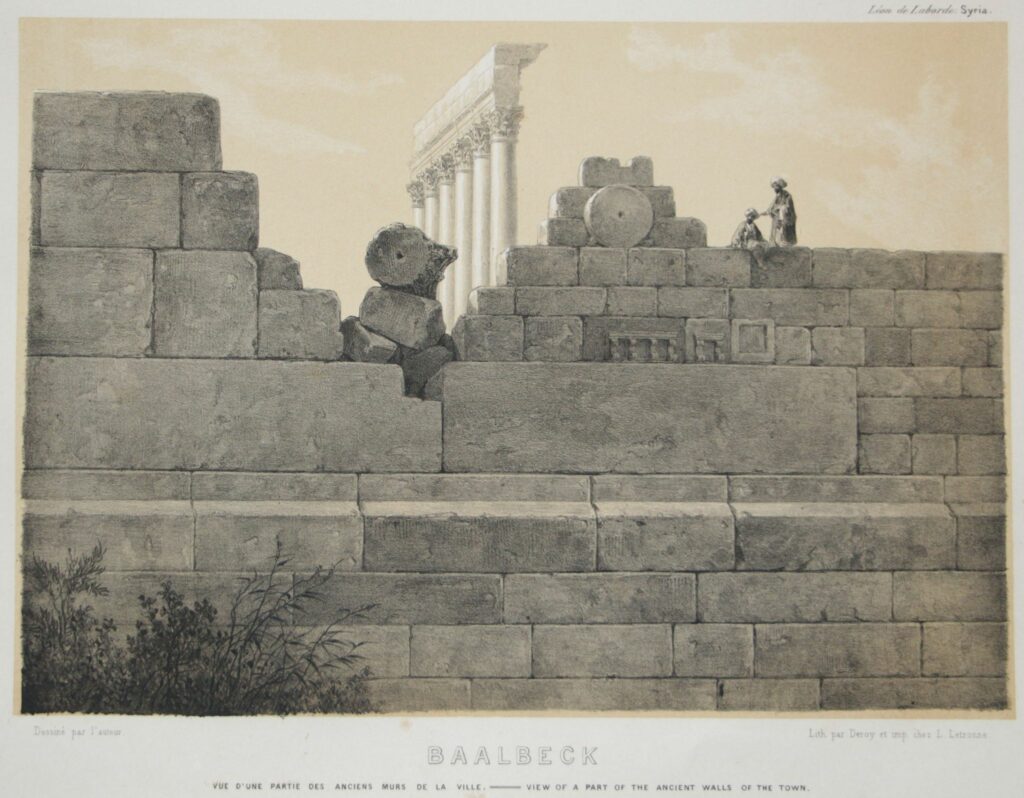
For comparison below two pictures from the same site. Above Tafel 53, Erster Band from Wiegand’s Baalbek and below a lithograph of the same location taken from ‘Voyage de La Syrie’ drawn by Léon de Laborde during the 1830’s.
And another two comparable pictures: Above Tafel 8, Erster Band and below a lithograph taken from ‘Voyage de La Syrie’.